Platform comparison
| Platform | YES odds | NO odds | Fee | KYC | Settlement | |
|---|---|---|---|---|---|---|
Polymarket (via Kalshi vs Polymarket) Pick polygram.ink (preferred broker) |
100% | 0% | 0% (USDC on-chain) | No-KYC up to $1,500 | USDC, auto via UMA oracle | View on Polymarket → |
Polymarket (direct) polymarket.com |
100% | 0% | 0% | Geo-blocked in US/UK/EU | USDC, on-chain | View on Polymarket → |
Kalshi kalshi.com |
— | — | Up to 7% per trade | US-only, KYC required | USD | View on Polymarket → |
Betfair Exchange betfair.com |
— | — | 2-5% commission | Full KYC from first trade | GBP / EUR | View on Polymarket → |
Manifold Markets manifold.markets |
— | — | Play-money (mana) | None — play-money | Mana (no cash-out) | View on Polymarket → |
Outcome probabilities
Current market-implied probability for each outcome, from the live order book.
| Outcome | Probability |
|---|---|
| July 18 | 100% |
| July 20 | 100% |
| July 22 | 100% |
| July 23 | 99% |
| July 24 | 92% |
| July 25 | 76% |
| July 26 | 68% |
| July 31 | 54% |
| August 15 | 34% |
| August 31 | 28% |
Market context
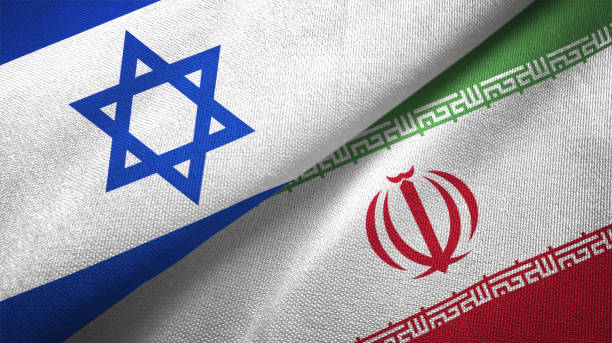
Israel and Iran are still being judged against a ceasefire that has already shown how quickly it can be tested. Trump announced the truce in June, but the first days were marked by reported violations and reciprocal accusations, including Israeli claims of a fresh Iranian missile launch in early June and later reports that the agreement remained fragile rather than fully normalised.[1][7][12] That history matters for pricing: a contract sitting at **100% YES** implies the market is treating renewed direct strikes between the two states as highly unlikely over the remaining horizon, even though the benchmark is narrow and defined by any qualifying air or surface-to-surface missile strike that lands on the other country.
The closest comparables are the earlier short ceasefires in this conflict, which repeatedly held only after an initial flare-up and were vulnerable to spillover from adjacent theatres such as Lebanon.[3][11][12] Those episodes suggest traders should not read a headline ceasefire as a guarantee of durability; the relevant question is whether either side resumes direct, state-on-state kinetic action before the August 2026 expiry. On that measure, the current contract appears much firmer than earlier one-week or two-week arrangements, but prediction-market certainty is still meaningfully different from the more cautious tone in news coverage, which has repeatedly described the situation as unclear or fragile rather than settled.[4][12]
For catalysts, watch formal statements from Washington, Tehran and Jerusalem, plus any mediation or verification messaging that would reset the deterrence backdrop. Reuters reported in April that the initial truce coincided with a sharp drop in oil and a rebound in risk assets, showing how quickly markets reprice on ceasefire headlines and operational pauses.[13] More recently, AP and PBS coverage has emphasised that fresh deadlines, retaliatory warnings and unresolved nuclear-related diplomacy can all feed back into military risk, especially if talks stall or one side signals that the ceasefire no longer binds specific domains.[4][10]
Methodology
This page is a comparison snapshot: one live quote, four reference venues with their key attributes, and a single execution path — every trade button routes to Kalshi vs Polymarket, which mirrors the Polymarket order book directly.
Resolution & payout
At resolution the UMA oracle takes over: a proposer posts the outcome with a bond, any token holder can dispute within two hours. Without dispute the result is accepted and the smart contract distributes USDC instantly.
On Kalshi (CFTC-regulated) resolution runs through their in-house clearing engine in USD. Betfair Exchange settles after match end in the account's local currency. Manifold pays no cash — only its in-platform "mana" currency.
FAQ
- How does resolution work?
- Through the UMA Optimistic Oracle on Polygon: a proposer submits the outcome, a two-hour challenge window opens, and USDC payouts settle automatically once the result is final.
- What's the difference between YES and NO shares?
- A YES share pays $1.00 if the event happens, $0 otherwise. A NO share pays $1.00 if the event doesn't happen. The market price between 0¢ and 100¢ is the implied probability.
- What does Polymarket cost to trade?
- Polymarket itself charges 0% — the only cost is the Polygon network fee, typically under $0.01 per transaction. Off-chain venues like Kalshi or Betfair charge 2-7% commission.
- How fast are USDC deposits?
- Polygon credits deposits after 12 confirmations — usually under 30 seconds. Withdrawals follow the same path and land back in your wallet within minutes.
- How reliable are the quoted odds?
- The YES/NO percentages are the live mid-prices of the Polymarket order book. On deep markets they move every few seconds; on thinner ones you'll see short plateaus.
%22%2F%3E%3Cpath%20d%3D%22M%206%2066%20A%2026%2026%200%200%201%2058%2066%22%20fill%3D%22%23E6B98D%22%20opacity%3D%220.9%22%2F%3E%3Ccircle%20cx%3D%2232%22%20cy%3D%2226%22%20r%3D%2222%22%20fill%3D%22%23F5CBA7%22%2F%3E%3Crect%20x%3D%2210%22%20y%3D%224%22%20width%3D%2244%22%20height%3D%2214%22%20rx%3D%227%22%20fill%3D%22%2322d3ee%22%20opacity%3D%220.9%22%2F%3E%3Crect%20x%3D%228%22%20%20y%3D%2218%22%20width%3D%228%22%20%20height%3D%2218%22%20rx%3D%224%22%20fill%3D%22%2322d3ee%22%20opacity%3D%220.7%22%2F%3E%3Crect%20x%3D%2248%22%20y%3D%2218%22%20width%3D%228%22%20%20height%3D%2218%22%20rx%3D%224%22%20fill%3D%22%2322d3ee%22%20opacity%3D%220.7%22%2F%3E%3C%2Fsvg%3E) and
and%22%2F%3E%3Cpath%20d%3D%22M%206%2066%20A%2026%2026%200%200%201%2058%2066%22%20fill%3D%22%23E6B98D%22%20opacity%3D%220.9%22%2F%3E%3Ccircle%20cx%3D%2232%22%20cy%3D%2226%22%20r%3D%2222%22%20fill%3D%22%23F5CBA7%22%2F%3E%3Crect%20x%3D%2214%22%20y%3D%224%22%20width%3D%2236%22%20height%3D%228%22%20rx%3D%224%22%20fill%3D%22%2322d3ee%22%2F%3E%3C%2Fsvg%3E)
Trade Israel x Iran ceasefire continues through 2026? on Kalshi vs Polymarket
Live order book, 0% fees, USDC settlement in seconds.
Open live market →