Platform comparison
| Platform | YES odds | NO odds | Fee | KYC | Settlement | |
|---|---|---|---|---|---|---|
Polymarket (via Kalshi vs Polymarket) Pick polygram.ink (preferred broker) |
53% | 47% | 0% (USDC on-chain) | No-KYC up to $1,500 | USDC, auto via UMA oracle | View on Polymarket → |
Polymarket (direct) polymarket.com |
53% | 47% | 0% | Geo-blocked in US/UK/EU | USDC, on-chain | View on Polymarket → |
Kalshi kalshi.com |
— | — | Up to 7% per trade | US-only, KYC required | USD | View on Polymarket → |
Betfair Exchange betfair.com |
— | — | 2-5% commission | Full KYC from first trade | GBP / EUR | View on Polymarket → |
Manifold Markets manifold.markets |
— | — | Play-money (mana) | None — play-money | Mana (no cash-out) | View on Polymarket → |
Outcome probabilities
Current market-implied probability for each outcome, from the live order book.
| Outcome | Probability |
|---|---|
| 29°C | 53% |
| 28°C | 43% |
| 30°C | 2% |
| 31°C | 1% |
| 23°C or below | 0% |
| 24°C | 0% |
| 25°C | 0% |
| 26°C | 0% |
| 27°C | 0% |
| 32°C | 0% |
| 33°C or higher | 0% |
Market context
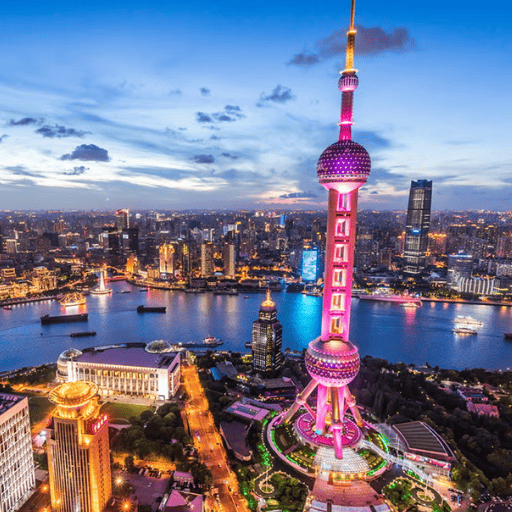
Shanghai's weather on 11 August 2026 will determine which temperature band captures the day's peak reading at Pudong International Airport Station. The market currently shows zero probability assigned to any outcome, suggesting either incomplete pricing across platforms or genuine uncertainty about which range will materialise. Resolution hinges on Weather Underground's Daily Observations table rather than summary figures, a distinction that occasionally produces discrepancies worth monitoring.
August represents Shanghai's hottest month climatologically, with daily highs typically ranging between 32–34°C, though extremes have reached 40°C during heatwaves. Historical data from the past decade shows that mid-August temperatures in Shanghai rarely deviate sharply from seasonal norms unless influenced by typhoon activity or unusual atmospheric blocking patterns. The 0% crowd probability suggests either sparse trading volume or that traders are awaiting clearer atmospheric forecasts before committing capital to specific temperature bands.
Traders should monitor tropical cyclone activity across the Western Pacific in late July and early August, as storm systems can suppress temperatures significantly or, conversely, create pre-storm heat surges. China's meteorological service typically issues extended forecasts 10–14 days ahead; such announcements in late July will provide the first concrete guidance on whether August 11 falls within normal seasonal bounds or experiences anomalous conditions. The settlement window closes at midday UTC on 11 August, allowing only morning observations to influence final resolution, which compresses the trading window considerably once the date approaches.
Methodology
Methodologically we separate two layers: the live probability (Polymarket mid-price) and the platform attributes (fee, KYC, settlement currency, payment rails). That keeps the comparison honest — a single canonical probability across the row, with the venue-by-venue trade-offs spelt out in the columns next to it.
Resolution & payout
Settlement runs on-chain. Polymarket's contract logic separates YES and NO shares as conditional tokens; at resolution the winning share lifts to $1.00 and the losing one to $0. The outcome input comes from the UMA Optimistic Oracle, which secures against bad resolution with a bond + dispute window.
Once finalised, the smart contract pays USDC to the holders' wallets within minutes — no withdrawal fees beyond Polygon network gas. Kalshi settles in USD via CFTC clearance, Betfair in account currency net of commission, Manifold in play-money mana with no cash-out.
FAQ
- Is this market available outside the US?
- Polymarket itself is geo-blocked in the US/UK/EU. Always check the legal status of prediction markets in your jurisdiction before trading.
- How does resolution work?
- Through the UMA Optimistic Oracle on Polygon: a proposer submits the outcome, a two-hour challenge window opens, and USDC payouts settle automatically once the result is final.
- What's the difference between YES and NO shares?
- A YES share pays $1.00 if the event happens, $0 otherwise. A NO share pays $1.00 if the event doesn't happen. The market price between 0¢ and 100¢ is the implied probability.
- What does Polymarket cost to trade?
- Polymarket itself charges 0% — the only cost is the Polygon network fee, typically under $0.01 per transaction. Off-chain venues like Kalshi or Betfair charge 2-7% commission.
- How reliable are the quoted odds?
- The YES/NO percentages are the live mid-prices of the Polymarket order book. On deep markets they move every few seconds; on thinner ones you'll see short plateaus.
%22%2F%3E%3Cpath%20d%3D%22M%206%2066%20A%2026%2026%200%200%201%2058%2066%22%20fill%3D%22%23E6B98D%22%20opacity%3D%220.9%22%2F%3E%3Ccircle%20cx%3D%2232%22%20cy%3D%2226%22%20r%3D%2222%22%20fill%3D%22%23F5CBA7%22%2F%3E%3Crect%20x%3D%2210%22%20y%3D%224%22%20width%3D%2244%22%20height%3D%2214%22%20rx%3D%227%22%20fill%3D%22%2322d3ee%22%20opacity%3D%220.9%22%2F%3E%3Crect%20x%3D%228%22%20%20y%3D%2218%22%20width%3D%228%22%20%20height%3D%2218%22%20rx%3D%224%22%20fill%3D%22%2322d3ee%22%20opacity%3D%220.7%22%2F%3E%3Crect%20x%3D%2248%22%20y%3D%2218%22%20width%3D%228%22%20%20height%3D%2218%22%20rx%3D%224%22%20fill%3D%22%2322d3ee%22%20opacity%3D%220.7%22%2F%3E%3C%2Fsvg%3E) and
and%22%2F%3E%3Cpath%20d%3D%22M%206%2066%20A%2026%2026%200%200%201%2058%2066%22%20fill%3D%22%23E6B98D%22%20opacity%3D%220.9%22%2F%3E%3Ccircle%20cx%3D%2232%22%20cy%3D%2226%22%20r%3D%2222%22%20fill%3D%22%23F5CBA7%22%2F%3E%3Crect%20x%3D%2214%22%20y%3D%224%22%20width%3D%2236%22%20height%3D%228%22%20rx%3D%224%22%20fill%3D%22%2322d3ee%22%2F%3E%3C%2Fsvg%3E)
Trade Highest temperature in Shanghai on August 11? on Kalshi vs Polymarket
Live order book, 0% fees, USDC settlement in seconds.
Open live market →