Platform comparison
| Platform | YES odds | NO odds | Fee | KYC | Settlement | |
|---|---|---|---|---|---|---|
Polymarket (via Kalshi vs Polymarket) Pick polygram.ink (preferred broker) |
46% | 54% | 0% (USDC on-chain) | No-KYC up to $1,500 | USDC, auto via UMA oracle | View on Polymarket → |
Polymarket (direct) polymarket.com |
46% | 54% | 0% | Geo-blocked in US/UK/EU | USDC, on-chain | View on Polymarket → |
Kalshi kalshi.com |
— | — | Up to 7% per trade | US-only, KYC required | USD | View on Polymarket → |
Betfair Exchange betfair.com |
— | — | 2-5% commission | Full KYC from first trade | GBP / EUR | View on Polymarket → |
Manifold Markets manifold.markets |
— | — | Play-money (mana) | None — play-money | Mana (no cash-out) | View on Polymarket → |
Outcome probabilities
Current market-implied probability for each outcome, from the live order book.
| Outcome | Probability |
|---|---|
| 33°C | 46% |
| 32°C | 28% |
| 34°C | 22% |
| 31°C | 4% |
| 35°C | 4% |
| 30°C | 1% |
| 27°C or below | 0% |
| 28°C | 0% |
| 29°C | 0% |
| 36°C | 0% |
| 37°C or higher | 0% |
Market context
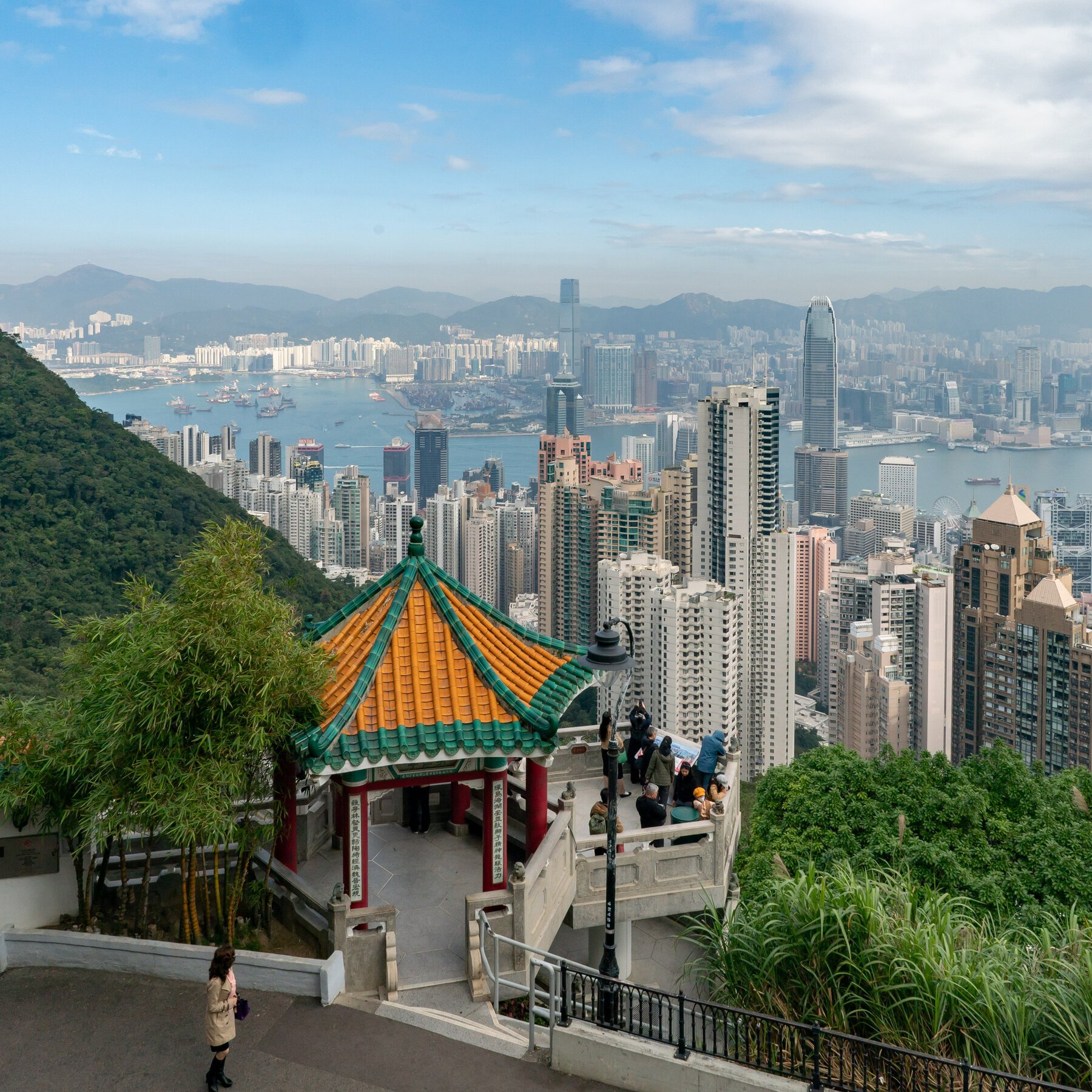
Hong Kong’s highest temperature on 6 August will be set by the Hong Kong Observatory’s official daily maximum in Celsius, and the market is currently pricing that outcome as effectively impossible with a 0% YES implied probability. That sits against a live weather backdrop where short-range forecasts still point to a hot but not extreme day: AccuWeather’s 6 August outlook shows a high of about 88°F, or roughly 31.1°C, while other August days in the same forecast run a little hotter, suggesting the distribution is clustered around the low 30s rather than the mid-30s.[1]
Historically, Hong Kong in early August often posts mean daily maximum temperatures around 31.6°C, which provides a useful anchor for reading the contract and helps explain why sub-32°C outcomes tend to dominate in this part of the calendar.[4] Recent summers also show that the city can still produce sharp spikes: official reporting noted August 2024 was exceptionally hot, with a mean daily maximum of 32.3°C, and the Observatory described 2025 as an August with multiple weather outbreaks rather than a uniformly scorching month.[8][3] In other words, sportsbook-style temperature bands, prediction-market pricing, and consensus forecasters are all likely to lean on whether cloud, rain, or a pre-tropical disturbance trims the peak by a degree or two.
The main catalyst to watch is the Hong Kong Observatory’s final “Daily Extract”, because this market cannot settle until the 6 August figure is published and the resolution source is the official “Absolute Daily Max (deg. C)”.[4] Traders should also watch for any Observatory warning updates or late-day convection that could cap the maximum, because in Hong Kong the day’s high often arrives before evening rain bands develop. If the operational forecast keeps pointing to highs around 31°C and the live market remains at 0%, the gap is not about a dramatic weather disagreement so much as a pricing disconnect between the contract’s exact-settlement mechanics and the broader expectation of a typical hot-season reading.[1][5]
Methodology
Methodologically we separate two layers: the live probability (Polymarket mid-price) and the platform attributes (fee, KYC, settlement currency, payment rails). That keeps the comparison honest — a single canonical probability across the row, with the venue-by-venue trade-offs spelt out in the columns next to it.
Resolution & payout
Polymarket-based markets settle through the UMA Optimistic Oracle on Polygon. A proposer submits the outcome, a two-hour challenge window opens, and unchallenged proposals finalise the resolution. Payouts settle automatically in USDC the moment the result is final — no bookmaker, no delay.
Kalshi-based markets settle in USD via the CFTC-regulated clearinghouse. Betfair Exchange settles in GBP/EUR net of commission. Manifold is play-money and does not pay out real funds.
FAQ
- Is this market available outside the US?
- Polymarket itself is geo-blocked in the US/UK/EU. Always check the legal status of prediction markets in your jurisdiction before trading.
- What's the difference between YES and NO shares?
- A YES share pays $1.00 if the event happens, $0 otherwise. A NO share pays $1.00 if the event doesn't happen. The market price between 0¢ and 100¢ is the implied probability.
- What does Polymarket cost to trade?
- Polymarket itself charges 0% — the only cost is the Polygon network fee, typically under $0.01 per transaction. Off-chain venues like Kalshi or Betfair charge 2-7% commission.
- How fast are USDC deposits?
- Polygon credits deposits after 12 confirmations — usually under 30 seconds. Withdrawals follow the same path and land back in your wallet within minutes.
- How reliable are the quoted odds?
- The YES/NO percentages are the live mid-prices of the Polymarket order book. On deep markets they move every few seconds; on thinner ones you'll see short plateaus.
%22%2F%3E%3Cpath%20d%3D%22M%206%2066%20A%2026%2026%200%200%201%2058%2066%22%20fill%3D%22%23E6B98D%22%20opacity%3D%220.9%22%2F%3E%3Ccircle%20cx%3D%2232%22%20cy%3D%2226%22%20r%3D%2222%22%20fill%3D%22%23F5CBA7%22%2F%3E%3Crect%20x%3D%2210%22%20y%3D%224%22%20width%3D%2244%22%20height%3D%2214%22%20rx%3D%227%22%20fill%3D%22%2322d3ee%22%20opacity%3D%220.9%22%2F%3E%3Crect%20x%3D%228%22%20%20y%3D%2218%22%20width%3D%228%22%20%20height%3D%2218%22%20rx%3D%224%22%20fill%3D%22%2322d3ee%22%20opacity%3D%220.7%22%2F%3E%3Crect%20x%3D%2248%22%20y%3D%2218%22%20width%3D%228%22%20%20height%3D%2218%22%20rx%3D%224%22%20fill%3D%22%2322d3ee%22%20opacity%3D%220.7%22%2F%3E%3C%2Fsvg%3E) and
and%22%2F%3E%3Cpath%20d%3D%22M%206%2066%20A%2026%2026%200%200%201%2058%2066%22%20fill%3D%22%23E6B98D%22%20opacity%3D%220.9%22%2F%3E%3Ccircle%20cx%3D%2232%22%20cy%3D%2226%22%20r%3D%2222%22%20fill%3D%22%23F5CBA7%22%2F%3E%3Crect%20x%3D%2214%22%20y%3D%224%22%20width%3D%2236%22%20height%3D%228%22%20rx%3D%224%22%20fill%3D%22%2322d3ee%22%2F%3E%3C%2Fsvg%3E)
Trade Highest temperature in Hong Kong on August 6? on Kalshi vs Polymarket
Live order book, 0% fees, USDC settlement in seconds.
Open live market →