Platform comparison
| Platform | YES odds | NO odds | Fee | KYC | Settlement | |
|---|---|---|---|---|---|---|
Polymarket (via Kalshi vs Polymarket) Pick polygram.ink (preferred broker) |
59% | 41% | 0% (USDC on-chain) | No-KYC up to $1,500 | USDC, auto via UMA oracle | View on Polymarket → |
Polymarket (direct) polymarket.com |
59% | 41% | 0% | Geo-blocked in US/UK/EU | USDC, on-chain | View on Polymarket → |
Kalshi kalshi.com |
— | — | Up to 7% per trade | US-only, KYC required | USD | View on Polymarket → |
Betfair Exchange betfair.com |
— | — | 2-5% commission | Full KYC from first trade | GBP / EUR | View on Polymarket → |
Manifold Markets manifold.markets |
— | — | Play-money (mana) | None — play-money | Mana (no cash-out) | View on Polymarket → |
Outcome probabilities
Current market-implied probability for each outcome, from the live order book.
| Outcome | Probability |
|---|---|
| December 31 | 59% |
| October 31 | 43% |
| September 30 | 26% |
| August 31 | 13% |
| July 15 | 0% |
| July 31 | 0% |
Market context
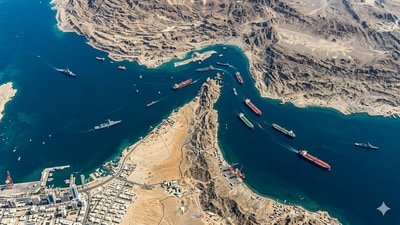
Iran has moved from an informal, vessel-by-vessel charging practice to a more explicit fee regime in the Strait of Hormuz, but the key market question is whether that becomes an *official, generalised* policy that is still active by the end date. Bloomberg reported in March that some commercial ships were already being asked for as much as $2 million per voyage on an ad hoc basis, while Reuters and Euronews later described Tehran as framing the same payments as fees for navigational, environmental, security or insurance-related services rather than a toll[1][7][14]. That distinction matters for settlement: isolated demands and back-channel collections are not enough unless they are announced as a standing scheme and applied broadly enough to meet the contract’s threshold.
Historically, this market has to be read against repeated cycles of escalation, denial, and partial rollback. Reuters said Iran was proposing charges in April as part of a peace framework, then Reuters again reported on 19 June that the authority governing the strait would forgo anticipated fees during a 60-day negotiation period[14][12]. Yet later coverage from the New York Times, Euronews and the Times of Israel suggested Tehran continued to signal that service fees would return, with an official body set up to manage permits and collect payment[2][8][5]. That mixed record explains why the current crowd-implied probability can sit at 0% even while headline risk remains elevated.
A trader should watch for three things: a formal decree from Iran’s foreign ministry or Supreme National Security Council, evidence of published tariffs or permit rules, and confirmation that ships are actually being billed after the negotiation window or any ceasefire-related pause expires[8][12]. Reuters noted that the 60-day waiver covered security, safety, environmental services and associated insurance, so any renewal, extension or replacement mechanism would be the cleanest catalyst for this contract[12]. The main cross-platform divergence is that prediction-market pricing appears to be discounting the fee regime entirely, while reporting from Bloomberg, Reuters and Euronews shows analysts and shipping observers treating some form of Iranian collection as plausible and, at times, already operating[1][14][7].
Methodology
Methodologically we separate two layers: the live probability (Polymarket mid-price) and the platform attributes (fee, KYC, settlement currency, payment rails). That keeps the comparison honest — a single canonical probability across the row, with the venue-by-venue trade-offs spelt out in the columns next to it.
Resolution & payout
Polymarket-based markets settle through the UMA Optimistic Oracle on Polygon. A proposer submits the outcome, a two-hour challenge window opens, and unchallenged proposals finalise the resolution. Payouts settle automatically in USDC the moment the result is final — no bookmaker, no delay.
Kalshi-based markets settle in USD via the CFTC-regulated clearinghouse. Betfair Exchange settles in GBP/EUR net of commission. Manifold is play-money and does not pay out real funds.
FAQ
- Where can I trade this market with the lowest fees?
- Polymarket is geo-blocked in the US/UK/EU. The easiest 0%-fee broker into the same order book is Kalshi vs Polymarket. Kalshi charges up to 7% per trade; Betfair Exchange takes 2-5% commission on net winnings.
- How does resolution work?
- Through the UMA Optimistic Oracle on Polygon: a proposer submits the outcome, a two-hour challenge window opens, and USDC payouts settle automatically once the result is final.
- What's the difference between YES and NO shares?
- A YES share pays $1.00 if the event happens, $0 otherwise. A NO share pays $1.00 if the event doesn't happen. The market price between 0¢ and 100¢ is the implied probability.
- What does Polymarket cost to trade?
- Polymarket itself charges 0% — the only cost is the Polygon network fee, typically under $0.01 per transaction. Off-chain venues like Kalshi or Betfair charge 2-7% commission.
- How fast are USDC deposits?
- Polygon credits deposits after 12 confirmations — usually under 30 seconds. Withdrawals follow the same path and land back in your wallet within minutes.
%22%2F%3E%3Cpath%20d%3D%22M%206%2066%20A%2026%2026%200%200%201%2058%2066%22%20fill%3D%22%23E6B98D%22%20opacity%3D%220.9%22%2F%3E%3Ccircle%20cx%3D%2232%22%20cy%3D%2226%22%20r%3D%2222%22%20fill%3D%22%23F5CBA7%22%2F%3E%3Crect%20x%3D%2210%22%20y%3D%224%22%20width%3D%2244%22%20height%3D%2214%22%20rx%3D%227%22%20fill%3D%22%2322d3ee%22%20opacity%3D%220.9%22%2F%3E%3Crect%20x%3D%228%22%20%20y%3D%2218%22%20width%3D%228%22%20%20height%3D%2218%22%20rx%3D%224%22%20fill%3D%22%2322d3ee%22%20opacity%3D%220.7%22%2F%3E%3Crect%20x%3D%2248%22%20y%3D%2218%22%20width%3D%228%22%20%20height%3D%2218%22%20rx%3D%224%22%20fill%3D%22%2322d3ee%22%20opacity%3D%220.7%22%2F%3E%3C%2Fsvg%3E) and
and%22%2F%3E%3Cpath%20d%3D%22M%206%2066%20A%2026%2026%200%200%201%2058%2066%22%20fill%3D%22%23E6B98D%22%20opacity%3D%220.9%22%2F%3E%3Ccircle%20cx%3D%2232%22%20cy%3D%2226%22%20r%3D%2222%22%20fill%3D%22%23F5CBA7%22%2F%3E%3Crect%20x%3D%2214%22%20y%3D%224%22%20width%3D%2236%22%20height%3D%228%22%20rx%3D%224%22%20fill%3D%22%2322d3ee%22%2F%3E%3C%2Fsvg%3E)
Trade Iran charges Hormuz fees by 2026? on Kalshi vs Polymarket
Live order book, 0% fees, USDC settlement in seconds.
Open live market →