Platform comparison
| Platform | YES odds | NO odds | Fee | KYC | Settlement | |
|---|---|---|---|---|---|---|
Polymarket (via Kalshi vs Polymarket) Pick polygram.ink (preferred broker) |
1% | 99% | 0% (USDC on-chain) | No-KYC up to $1,500 | USDC, auto via UMA oracle | View on Polymarket → |
Polymarket (direct) polymarket.com |
1% | 99% | 0% | Geo-blocked in US/UK/EU | USDC, on-chain | View on Polymarket → |
Kalshi kalshi.com |
— | — | Up to 7% per trade | US-only, KYC required | USD | View on Polymarket → |
Betfair Exchange betfair.com |
— | — | 2-5% commission | Full KYC from first trade | GBP / EUR | View on Polymarket → |
Manifold Markets manifold.markets |
— | — | Play-money (mana) | None — play-money | Mana (no cash-out) | View on Polymarket → |
Outcome probabilities
Current market-implied probability for each outcome, from the live order book.
| Outcome | Probability |
|---|---|
| August 15 | 1% |
| June 26 | 0% |
| June 30 | 0% |
| July 31 | 0% |
| July 7 | 0% |
| July 10 | 0% |
| July 17 | 0% |
| July 24 | 0% |
Market context
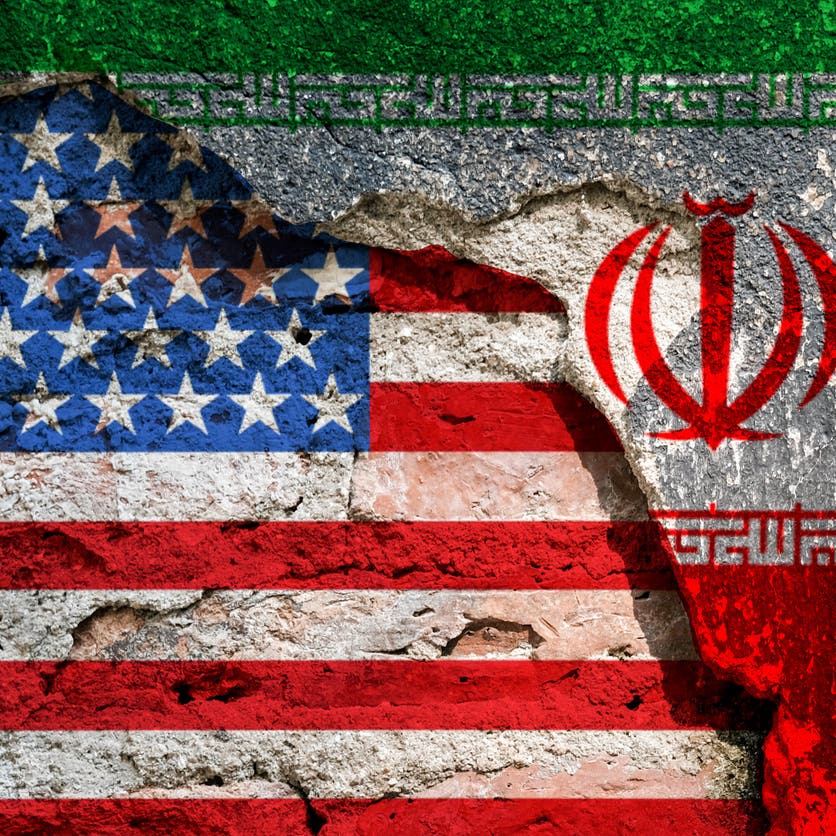
The benchmark event is a formal Iranian announcement that it is ending participation in the 60-day negotiations created by the June memorandum, not merely hardening its rhetoric or delaying talks. The current 0% crowd-implied probability sits far below the kind of near-term pricing that typically follows an active diplomatic process, but it is also consistent with a market that has not yet seen an official termination notice from Tehran. Reuters reported on 28 June that Iran skipped scheduled technical talks after recent attacks and unresolved MoU conditions, while state-linked remarks on 14 July stressed that Iran had not left the negotiating table and would not be the first side to request talks.[5][9]
Comparable episodes argue for caution in reading sharp language as a definite withdrawal signal. In June, Iranian officials said the MoU was finalised and that final-agreement talks would begin within the 60-day period, but that entry into those talks depended on US compliance with the accord’s terms.[18] That conditionality gives Tehran room to suspend, defer, or denounce implementation without triggering this contract unless the government publicly and officially terminates the negotiation process. Cross-platformly, a Kalshi-vs-Polymarket comparison is likely to show the same basic issue: prediction-market pricing can remain close to zero even when headlines are hostile, because the contract is narrower than general collapse of diplomacy.[7][18]
Traders should watch for three catalysts: a named foreign-ministry statement, a Supreme National Security Council communiqué, or an authorised deputy foreign minister explicitly saying Iran is ending the negotiations; a published schedule for the next technical round; and any evidence that the US has met or missed key sequencing demands on sanctions relief, asset access, or maritime de-escalation.[5][9][18] Recent reporting has repeatedly framed the talks around implementation disputes rather than an outright walkout, so the main path to a “Yes” remains an official, on-the-record exit rather than a freeze or boycott.[5][18]
Methodology
This page is a comparison snapshot: one live quote, four reference venues with their key attributes, and a single execution path — every trade button routes to Kalshi vs Polymarket, which mirrors the Polymarket order book directly.
Resolution & payout
Settlement runs on-chain. Polymarket's contract logic separates YES and NO shares as conditional tokens; at resolution the winning share lifts to $1.00 and the losing one to $0. The outcome input comes from the UMA Optimistic Oracle, which secures against bad resolution with a bond + dispute window.
Once finalised, the smart contract pays USDC to the holders' wallets within minutes — no withdrawal fees beyond Polygon network gas. Kalshi settles in USD via CFTC clearance, Betfair in account currency net of commission, Manifold in play-money mana with no cash-out.
FAQ
- Is this market available outside the US?
- Polymarket itself is geo-blocked in the US/UK/EU. Always check the legal status of prediction markets in your jurisdiction before trading.
- How does resolution work?
- Through the UMA Optimistic Oracle on Polygon: a proposer submits the outcome, a two-hour challenge window opens, and USDC payouts settle automatically once the result is final.
- What does Polymarket cost to trade?
- Polymarket itself charges 0% — the only cost is the Polygon network fee, typically under $0.01 per transaction. Off-chain venues like Kalshi or Betfair charge 2-7% commission.
- Do I need to KYC for this market?
- On Polymarket directly, no — it's wallet-based. Intermediary brokers like Kalshi vs Polymarket trigger KYC only above $1,500 of lifetime trading volume; under that you trade pseudonymously with a single wallet address.
- How reliable are the quoted odds?
- The YES/NO percentages are the live mid-prices of the Polymarket order book. On deep markets they move every few seconds; on thinner ones you'll see short plateaus.
%22%2F%3E%3Cpath%20d%3D%22M%206%2066%20A%2026%2026%200%200%201%2058%2066%22%20fill%3D%22%23E6B98D%22%20opacity%3D%220.9%22%2F%3E%3Ccircle%20cx%3D%2232%22%20cy%3D%2226%22%20r%3D%2222%22%20fill%3D%22%23F5CBA7%22%2F%3E%3Crect%20x%3D%2210%22%20y%3D%224%22%20width%3D%2244%22%20height%3D%2214%22%20rx%3D%227%22%20fill%3D%22%2322d3ee%22%20opacity%3D%220.9%22%2F%3E%3Crect%20x%3D%228%22%20%20y%3D%2218%22%20width%3D%228%22%20%20height%3D%2218%22%20rx%3D%224%22%20fill%3D%22%2322d3ee%22%20opacity%3D%220.7%22%2F%3E%3Crect%20x%3D%2248%22%20y%3D%2218%22%20width%3D%228%22%20%20height%3D%2218%22%20rx%3D%224%22%20fill%3D%22%2322d3ee%22%20opacity%3D%220.7%22%2F%3E%3C%2Fsvg%3E) and
and%22%2F%3E%3Cpath%20d%3D%22M%206%2066%20A%2026%2026%200%200%201%2058%2066%22%20fill%3D%22%23E6B98D%22%20opacity%3D%220.9%22%2F%3E%3Ccircle%20cx%3D%2232%22%20cy%3D%2226%22%20r%3D%2222%22%20fill%3D%22%23F5CBA7%22%2F%3E%3Crect%20x%3D%2214%22%20y%3D%224%22%20width%3D%2236%22%20height%3D%228%22%20rx%3D%224%22%20fill%3D%22%2322d3ee%22%2F%3E%3C%2Fsvg%3E)
Trade Iran announces withdrawal from MOU negotiations by 2… on Kalshi vs Polymarket
Live order book, 0% fees, USDC settlement in seconds.
Open live market →